
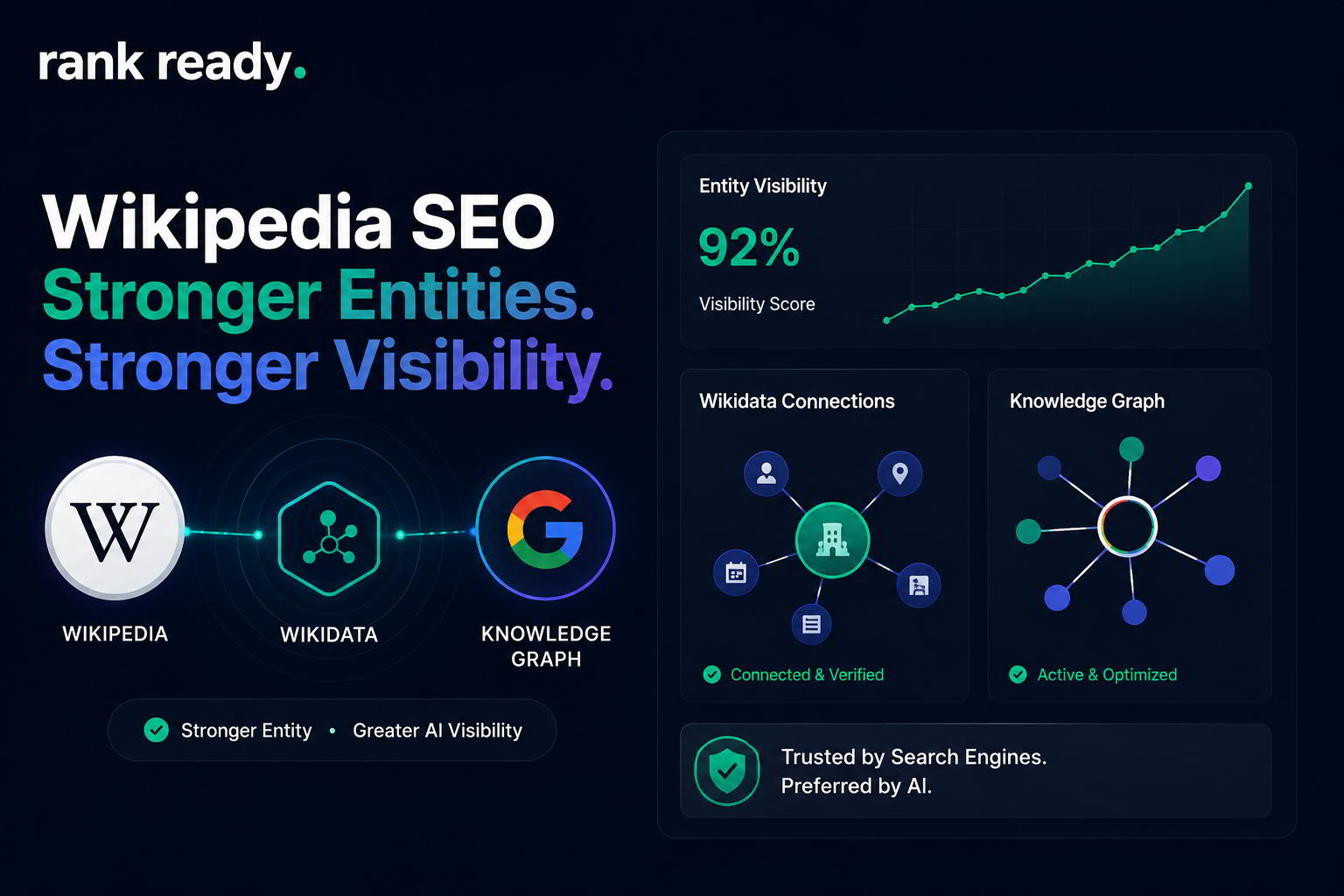
LLMs trained on the open web disproportionately weight a few sources — and Wikipedia is at the top of the list. If you’re not in the Knowledge Graph, you’re invisible to half the entity-driven world.Most SEO agencies are still fighting the last war: rankings, backlinks, keyword density.Meanwhile, AI engines are shifting toward entity retrieval.That changes visibility completely.Search engines increasingly want to understand:
- Who your brand is.
- What entity category you belong to.
- Which authoritative sources validate you.
- How consistently your entity appears across the web.
Why Wikipedia matters to AI engines (the data)
Wikipedia remains one of the most heavily referenced entity databases on the internet.That matters because modern AI systems rely heavily on entity consistency.Wikipedia helps establish:- Entity identity.
- Historical relevance.
- Topic associations.
- Authority relationships.
If Google maps the web through entities, Wikipedia is one of the strongest public entity maps ever created.Large language models disproportionately reference high-trust, highly structured sources during training and retrieval processes.That includes:
- Wikipedia.
- Wikidata.
- Government databases.
- Major publisher archives.
Wikipedia notability: what actually qualifies a brand
Most businesses misunderstand Wikipedia completely.Wikipedia is not a business directory.It is a notability system.What Wikipedia actually evaluates
Brands usually qualify through:- Significant independent media coverage.
- Third-party reporting.
- Industry impact.
- Historical significance.
- Reliable source citations.
- Press releases.
- Sponsored articles.
- Self-published blogs.
- Company-created sources.
The right way to be on Wikipedia (and the wrong way)
Most corporate Wikipedia pages fail because they read like marketing copy.Wikipedia editors remove promotional content aggressively.Especially content containing:- Sales language.
- Unverified claims.
- Weak sourcing.
- Conflict-of-interest editing.
The wrong approach
- Hiring cheap page creators.
- Publishing PR-style biographies.
- Using self-referential citations.
- Stuffing achievements without sourcing.
The right approach
- Build real media coverage first.
- Establish independent references.
- Strengthen entity consistency across the web.
- Use neutral encyclopedic language.
- Knowledge Panels.
- Structured schema.
- AI citations.
- Semantic consistency.
- Cross-platform authority signals.
Wikidata: the structured data layer most brands ignore
Most businesses have never heard of Wikidata.That is a mistake.Wikidata functions as a massive structured entity database powering relationships between people, organizations, places, and concepts.It acts as a machine-readable layer connected to:- Wikipedia.
- Knowledge Graph systems.
- AI retrieval engines.
- Semantic search frameworks.
Why Wikidata matters for GEO
Wikidata helps establish:- Entity identifiers.
- Official websites.
- Founders.
- Industry categories.
- Parent-child relationships.
- Cross-platform entity consistency.
- Cleaner entity understanding.
- Stronger cross-platform consistency.
- Better retrieval confidence.
- Improved semantic association.
How to set up your Wikidata entry
Creating a Wikidata entity is usually easier than qualifying for Wikipedia.But it still requires accuracy and verifiability.Core elements usually included
- Official company name.
- Website URL.
- Industry classification.
- Founding date.
- Headquarters location.
- Associated entities.
- Schema markup.
- Social profiles.
- Crunchbase data.
- Google Business Profile information.
- Official site entity references.
- Brand aliases.
- Name variations.
- Acquisitions.
- Regional entities.
- Founder relationships.
Linking your Wikidata entry to Knowledge Graph
Most brands assume Google’s Knowledge Graph updates automatically.Sometimes it does.Often it does not.Knowledge Graph visibility usually improves when entity consistency strengthens across trusted data sources.Signals that reinforce Knowledge Graph confidence
- Consistent schema markup.
- Authoritative citations.
- Structured social profiles.
- Wikipedia/Wikidata connections.
- Trusted publisher references.
- Different company names across platforms.
- Inconsistent founder information.
- Conflicting URLs.
- Weak schema implementation.
Beyond Wikipedia: other entity-establishment sources
Wikipedia is important.It is not the only entity signal.AI engines also evaluate broader authority ecosystems.Other important entity-establishment sources
- Crunchbase.
- LinkedIn company profiles.
- Google Business Profile.
- Industry associations.
- Authoritative publisher mentions.
- Podcast appearances.
- Conference speaker pages.
- PR.
- SEO.
- Structured data.
- Executive branding.
- Content strategy.
What to do if you can’t qualify for Wikipedia (alternatives that work)
Most companies are not immediately eligible for Wikipedia.That does not mean entity establishment stops.Strong alternatives include
- Building executive thought leadership.
- Earning industry coverage.
- Publishing data-driven research.
- Improving schema implementation.
- Strengthening Wikidata consistency.
- Building authoritative citations.
How to measure entity visibility
Entity visibility is measurable — just not through traditional ranking reports alone.Signals worth tracking
- Knowledge Panel appearance.
- AI citation frequency.
- Branded search growth.
- Entity consistency across platforms.
- Structured data validation.
- Third-party entity references.
- AI-generated recommendations.
- ChatGPT citations.
- Google AI Overviews.
- Perplexity references.
The brands building entity authority now are building future visibility
Most businesses still think SEO is only about rankings.AI engines are moving toward entities.That changes the entire visibility model.Wikipedia, Wikidata, structured citations, schema consistency, and authoritative references increasingly shape whether machines confidently recognize your brand.The brands investing early in entity establishment are building long-term defensibility competitors cannot easily replicate later.That is why Wikipedia SEO, entity consistency, and Knowledge Graph optimization are becoming core GEO infrastructure — not optional technical extras.Entity establishment is one of the slowest-moving GEO investments — which is exactly why the brands starting now are building a moat. Our free audit identifies visibility gaps across Wikipedia SEO, Wikidata, and entity consistency, then maps a practical 6-month GEO authority plan.

0 Comments