
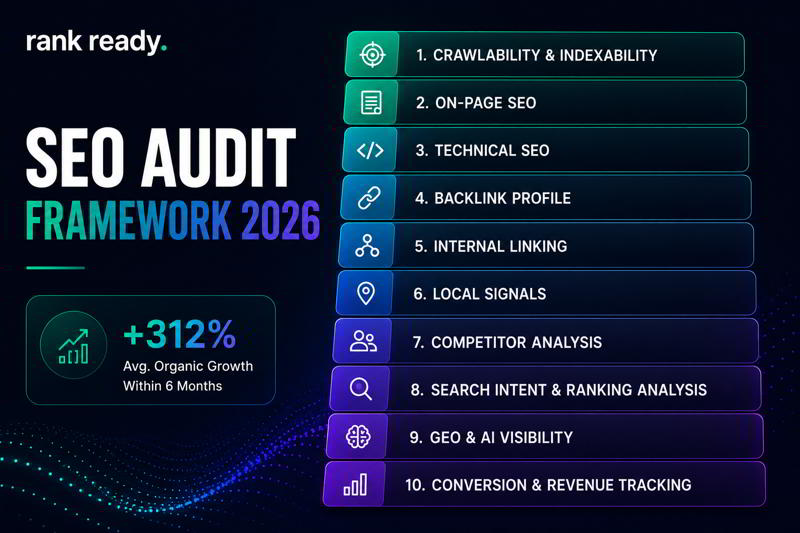
Why Most Audits Fail to Drive Change
Most audits fail before they’re delivered.Not because the data is inaccurate. Because the objective is wrong.Many agencies still treat an SEO audit as a reporting exercise rather than a decision-making tool. The goal becomes finding as many issues as possible instead of identifying the few issues that matter most.The result is predictable:- Massive PDF reports
- Hundreds of warnings
- Little prioritization
- No implementation plan
- No connection to revenue
The diagnosis versus theater problem
If a doctor handed you a report listing every measurable function in your body but couldn’t explain why you were sick, you’d find another doctor.The same principle applies to an SEO audit.Theater focuses on volume.Diagnosis focuses on causes.A useful audit should answer three questions:- What’s limiting growth?
- What’s the business impact?
- What should be fixed first?
The best SEO audit doesn’t tell you everything that’s wrong. It tells you what to fix first.
Layer 1: Crawlability and Indexability
The first layer of every SEO audit is straightforward.Can search engines access your content?And if they can, are they indexing the pages that actually matter?You’d be surprised how many businesses invest heavily in content while overlooking these basic questions.Start with crawlability
Crawlability determines whether search engines can discover pages efficiently.Common problems include:- Broken internal links
- Redirect chains
- Robots.txt restrictions
- Orphan pages
- Weak site architecture
- Missing XML sitemaps
Then evaluate indexability
Crawlability and indexability are different problems.A page can be accessible but still excluded from Google’s index.Common causes include:- Noindex directives
- Canonical conflicts
- Thin content
- Duplicate pages
- Soft 404 errors
Review index coverage before making assumptions
Google Search Console remains one of the most valuable sources of audit data.The Pages report can quickly reveal:- Excluded URLs
- Crawled but not indexed pages
- Redirect issues
- Canonical inconsistencies
- Server errors
Layer 2: On-Page SEO (Titles, Headings, Meta, Content Quality)
Once search engines can access and index content correctly, the next question becomes relevance.Can search engines clearly understand what each page should rank for?This is where on-page optimization enters the picture.Titles and meta descriptions still matter
Despite years of speculation, title tags remain one of the strongest on-page signals available.A strong SEO audit should evaluate:- Missing titles
- Duplicate titles
- Keyword targeting
- Click-through rate potential
- Search intent alignment
Heading structures should improve clarity
Heading tags remain one of the easiest places to identify weak optimization.Common findings include:- Multiple H1 tags
- Missing H1 tags
- Keyword-stuffed headings
- Inconsistent hierarchy
Content quality is now a topical authority question
Google stopped matching strings years ago. Modern search systems evaluate entities, relationships, context, and completeness.That’s why a modern SEO audit guide should evaluate:- Topical coverage
- Entity depth
- Search intent alignment
- Content freshness
- Competitive completeness
Content gaps often explain ranking ceilings
One of the highest-value components of an SEO audit is identifying missing coverage.Content gaps weaken topical authority and limit visibility.In many cases, rankings improve not because existing content changes, but because supporting content strengthens the overall topic ecosystem.Layer 3: Technical SEO (Core Web Vitals, Schema, Mobile)
Technical SEO is often misunderstood.Some businesses ignore it completely. Others obsess over it while neglecting bigger opportunities.The truth sits somewhere in the middle.Technical SEO rarely creates rankings by itself. It often prevents them.Core Web Vitals still deserve attention
Google continues using user-experience signals as part of its evaluation process.The three metrics receiving the most attention remain:- Largest Contentful Paint (LCP)
- Interaction to Next Paint (INP)
- Cumulative Layout Shift (CLS)
Schema remains underutilized
Most websites implement only the basics.Modern audits should evaluate:- Organization schema
- Article schema
- Service schema
- FAQ schema
- LocalBusiness schema
- Breadcrumb schema
Mobile performance is often the hidden issue
Google evaluates websites primarily through their mobile experience.Common problems include:- Slow mobile load times
- Heavy scripts
- Oversized images
- Layout instability
- Poor usability
Layer 4: Backlink Profile (Quality Over Quantity)
Every few years someone declares backlinks dead.Every few years the data proves otherwise.Backlinks remain one of the strongest signals search engines use to evaluate authority and trust. The difference in 2026 is that quality matters far more than volume.A modern SEO audit should focus less on how many links a website has and more on whether those links reinforce expertise, relevance, and authority.Authority without relevance is overrated
Many businesses chase high-authority links regardless of context.That’s a mistake.A relevant industry publication often provides more ranking value than a generic website with stronger authority metrics.A backlink audit should evaluate:- Topical relevance
- Authority and trust
- Anchor text diversity
- Link placement
- Referral traffic value
Most backlink reports miss the real question
Many audit reports focus on:- Total backlinks
- Referring domains
- Link growth trends
- Domain Rating changes
- Which links influence rankings?
- Which links drive qualified traffic?
- Which links support revenue-generating pages?
- Which links strengthen topical authority?
Risk matters too
While Google has become better at ignoring poor-quality links, obvious manipulation can still create problems.Common issues include:- Over-optimized anchor text
- Low-quality paid links
- Private blog network footprints
- Irrelevant sitewide links
Layer 5: Internal Linking (The Topical Authority Engine)
Internal linking remains one of the most overlooked ranking factors in SEO.That’s surprising because it’s also one of the few things businesses completely control.A strong SEO audit almost always includes a detailed review of internal link architecture.Internal links distribute authority
Every website accumulates authority unevenly.Some pages attract backlinks naturally.Others receive almost none.Internal links help distribute authority across the site and guide search engines toward priority pages.Common issues include:- Orphaned pages
- Weak anchor text
- Excessive click depth
- Disconnected content clusters
- Overlinked navigation structures
Topic clusters create stronger signals
Google evaluates relationships between pages, not just individual URLs.That’s why topic clusters continue outperforming isolated content strategies.A healthy cluster typically contains:- Primary topic page
- Supporting articles
- Related resources
- Contextual internal links
Many ranking gains come from architecture, not content
One of the most common findings in a professional SEO audit is that valuable content already exists but receives little internal authority.Improving internal linking frequently generates ranking improvements without adding new content or acquiring new backlinks.For examples of high-impact findings, see our breakdown of SEO bottlenecks discovered during audits.Layer 6: Local Signals (GBP, Citations, Reviews)
For local businesses, rankings alone rarely determine success.Visibility inside Google’s local ecosystem often matters just as much.That’s why local signals deserve their own layer within a modern SEO audit.Google Business Profile remains a major ranking factor
Many businesses treat Google Business Profile as a one-time setup task.The strongest local performers treat it as an active marketing asset.A local audit should evaluate:- Primary category selection
- Secondary categories
- Service listings
- Business descriptions
- Photos and updates
- Question and answer content
Reviews influence visibility and conversions
Reviews are no longer just reputation signals.They’re visibility signals too.A strong local SEO audit should evaluate:- Review quantity
- Review quality
- Review frequency
- Response rates
- Sentiment patterns
Consistency still builds trust
Name, Address, and Phone consistency remains important across local citations.Search engines trust businesses that present consistent information across the web.The audit should verify:- Directory listings
- Industry citations
- Social profiles
- Local business directories
Layer 7: Competitor Analysis (What They’re Doing Right)
One of the fastest ways to identify growth opportunities is studying competitors.Yet many audit providers barely scratch the surface.A modern SEO audit guide should include a meaningful competitive analysis component.Content gaps reveal missed opportunities
Competitors often rank because they’re covering topics you aren’t.Common gaps include:- Missing service pages
- Missing industry pages
- Missing comparison content
- Missing location pages
- Missing supporting resources
Authority gaps explain ranking differences
Sometimes competitors rank higher because they have stronger authority signals.A competitor-focused SEO audit should identify:- Backlink gaps
- Brand mention gaps
- Industry relationship gaps
- Media coverage opportunities
Competitors own more than rankings
Today’s search results contain multiple visibility layers.Competitors may dominate:- Featured snippets
- People Also Ask results
- Local Packs
- Video results
- AI Overviews
Layer 8: Search Intent and Ranking Analysis
Many websites rank well and still struggle to generate business results.The reason is often intent.Visibility alone isn’t enough.The right visibility matters.Ranking position doesn’t tell the whole story
Ranking third sounds impressive.Ranking third for a query that never converts is considerably less impressive.A proper SEO audit evaluates:- Keyword intent
- User expectations
- SERP composition
- Commercial value
- Conversion potential
Intent mismatches create hidden losses
This is one of the most common findings inside a senior-led audit.The page ranks.The visitors arrive.The conversions never happen.Why?The content solves a different problem than the user expected.Informational searches require educational content.Commercial searches require evaluation content.Transactional searches require action-oriented content.Matching intent often creates larger gains than improving rankings.Momentum matters
Experienced auditors don’t just analyze rankings.They analyze movement.A page climbing from position twenty to eleven often represents a larger opportunity than a page sitting comfortably at position three.Trend analysis helps identify where effort is most likely to generate returns.That’s the difference between reporting rankings and understanding rankings.“` “`html id=”q7h4lx”Layer 9: GEO and AI Visibility (The 2026 Layer Most Audits Skip)
If this article had been written three years ago, this section probably wouldn’t exist.
Today, it’s one of the most important components of a modern SEO audit.
Search no longer ends with Google.
Users increasingly discover businesses through:
- ChatGPT
- Google AI Overviews
- Perplexity
- Gemini
- Microsoft Copilot
The problem is that most audit providers still evaluate visibility as if traditional rankings are the only metric that matters.
They’re not.
A company can rank well in Google while remaining almost invisible inside AI-generated search experiences.
That’s becoming a competitive disadvantage.
Can AI systems find and cite your brand?
One of the first questions in a modern SEO audit should be whether AI platforms reference the business at all.
Common visibility issues include:
- Weak entity signals
- Limited topical authority
- Poor semantic coverage
- Few brand mentions
- Insufficient supporting content
Traditional rankings still matter.
But citations increasingly influence awareness, trust, and discovery.
Entity development is becoming a competitive advantage
Search engines and AI systems increasingly evaluate entities rather than isolated keywords.
That means businesses need strong relationships between:
- Brand
- Services
- Locations
- Authors
- Topics
- Industry expertise
The strongest websites create a network of signals that clearly communicate expertise.
Weak entity development often explains why similar websites achieve dramatically different visibility outcomes.
The NorthPeak SaaS example
NorthPeak SaaS entered 2025 with virtually no AI citation visibility.
Rankings weren’t the problem.
Entity depth was.
After improving semantic coverage and strengthening topical authority, AI citation visibility increased from 0% to 74% within ninety days.
That’s exactly why GEO belongs inside every modern SEO audit.
In 2026, rankings tell part of the story. Citations tell the rest.
Layer 10: Conversion and Revenue Tracking
Traffic is not the objective.
Business growth is.
Yet many audits stop before evaluating how search visibility connects to revenue.
A modern SEO audit should close that gap.
Most businesses measure rankings better than revenue
Ask a marketing team about ranking changes and you’ll often get an immediate answer.
Ask how much revenue organic search generated and the answer is frequently less clear.
A comprehensive audit should evaluate:
- Conversion tracking
- Call tracking
- CRM attribution
- Lead quality
- Revenue reporting
Without those systems, optimization becomes guesswork.
Conversion bottlenecks often hide behind strong rankings
Many businesses rank well and still underperform.
The issue isn’t visibility.
The issue is conversion.
Common findings include:
- Weak calls-to-action
- Poor form design
- Trust signal gaps
- Slow landing pages
- Mobile usability issues
Improving conversion rates often generates faster returns than chasing additional rankings.
Measure outcomes, not activity
Mid-Atlantic Realty generated $1.2 million in attributed organic revenue within twelve months.
The focus wasn’t rankings.
The focus was business outcomes.
That’s how every SEO audit should be evaluated.
What to Skip (The 80-Page Padding Sections)
The average audit report contains a surprising amount of information that never influences decisions.
That’s a problem.
If a finding doesn’t change priorities, it probably doesn’t belong in the report.
Common examples of audit padding
- Keyword density reports
- Dozens of screenshots
- Generic SEO scores
- Massive backlink exports
- Unprioritized issue lists
Data isn’t strategy.
Interpretation is strategy.
Clarity beats volume
A twenty-page report with clear priorities creates more value than a one-hundred-page report filled with disconnected observations.
The purpose of an SEO audit is not documenting everything.
It’s identifying what matters most.
How to Do This Yourself in Six Hours
Not every business needs professional help immediately.
A basic SEO audit can uncover many major issues in a single afternoon.
Hour 1: Review crawlability and indexation
- Broken links
- Redirects
- Index coverage
- Orphan pages
Hour 2: Analyze Google Search Console
- Performance trends
- Top pages
- Top queries
- Coverage issues
Hour 3: Evaluate content quality
- Intent alignment
- Topical coverage
- Content gaps
Hour 4: Review internal linking
- Authority distribution
- Anchor text
- Orphaned content
Hour 5: Compare competitors
- Content coverage
- Authority signals
- SERP ownership
Hour 6: Verify tracking
- Calls
- Forms
- Leads
- Revenue attribution
The goal isn’t perfection.
The goal is identifying bottlenecks.
When to Bring in a Senior Auditor (And What to Expect)
Eventually every business reaches a point where internal analysis stops producing answers.
That’s when a senior-led SEO audit becomes valuable.
Common reasons businesses bring in outside expertise
- Traffic plateaus
- Ranking declines
- Lead quality problems
- Site migrations
- AI visibility gaps
- Market expansion
What a senior audit should deliver
A professional audit should provide:
- Root-cause analysis
- Prioritized recommendations
- Impact estimates
- Implementation roadmap
- 30/60/90-day action plan
Anyone can generate data.
The value comes from translating that data into decisions.
The best SEO audit doesn’t create more work. It creates clarity.
The Difference Between Reports and Results
A modern SEO audit isn’t a PDF.
It’s a growth strategy.
The strongest audits identify constraints, prioritize actions, estimate business impact, and connect recommendations directly to revenue.
That’s why modern audits must evaluate more than crawl errors, title tags, and backlinks.
They must examine search intent, content quality, authority, AI visibility, conversion tracking, and competitive positioning.
The companies that grow fastest in 2026 won’t be the ones collecting the most reports.
They’ll be the ones acting on the right findings first.
That’s the real purpose of an audit.
Not documenting problems.
Creating momentum.
Our audits cover all 10 layers discussed in this guide, take 48 hours, and finish with a practical 30/60/90-day action plan.
Senior-led. No junior handoffs. No automated PDF exports disguised as strategy.
The first audit is free.
Book your SEO audit here and we’ll show you exactly what’s limiting growth, what to ignore, and what to fix first.
“`

0 Comments